


I was thinking about 2015 lately because 2015 is closer to the 1990s than today, and the 1990s are the current unanimous choice for the best decade of American history. Last decade that title belonged to the 1980s, and in the 1990s it was the 1960s. It was never the 50s and hopefully never will be. Personally, I got punched a lot more in the 90s but I guess Prince was still making music. Anyways, one big thing in 2015 was the USPS crisis. The financial failure of the postal service was a staple of Trump’s campaign:
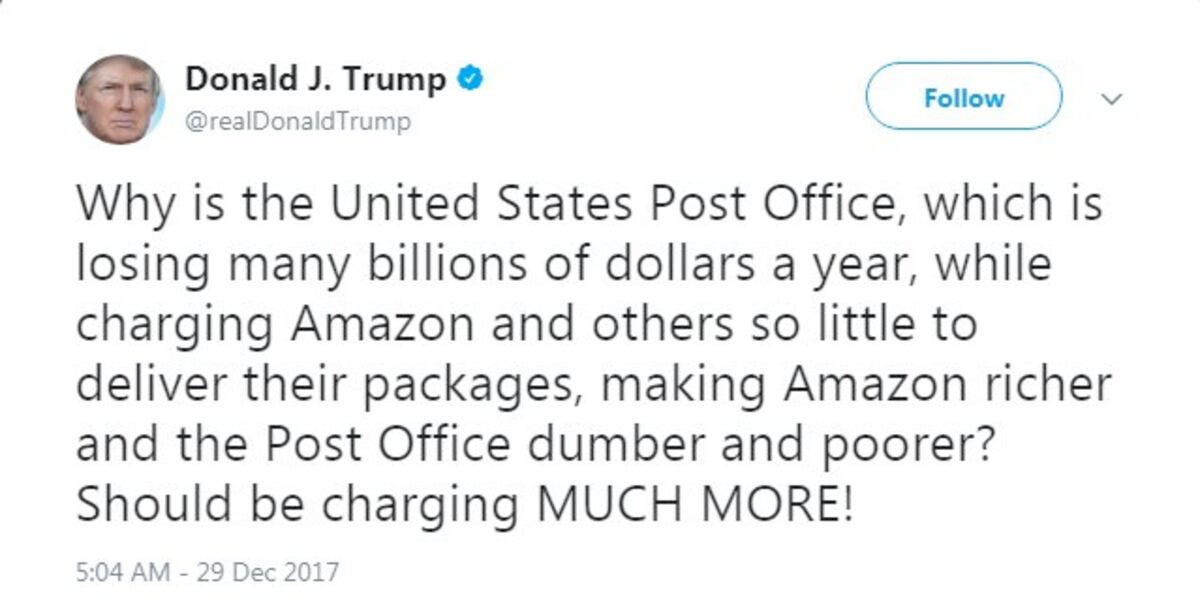
I remember, or maybe misremember, this being a politically contentious take. USPS may be a cost center but aren’t most government services? Also, people love the post office and always have. 84% of Americans approved of USPS in 2015 and >75% do today, according to Pew polls. Any American can conjure the image of their friendly mail carrier trudging through the rain, sleet or snow with their trusty blue canvas bags. It’s transcendentally American, like marines at Iwo Jima or Johnny Appleseed’s tin hat (need to get me a tin hat).

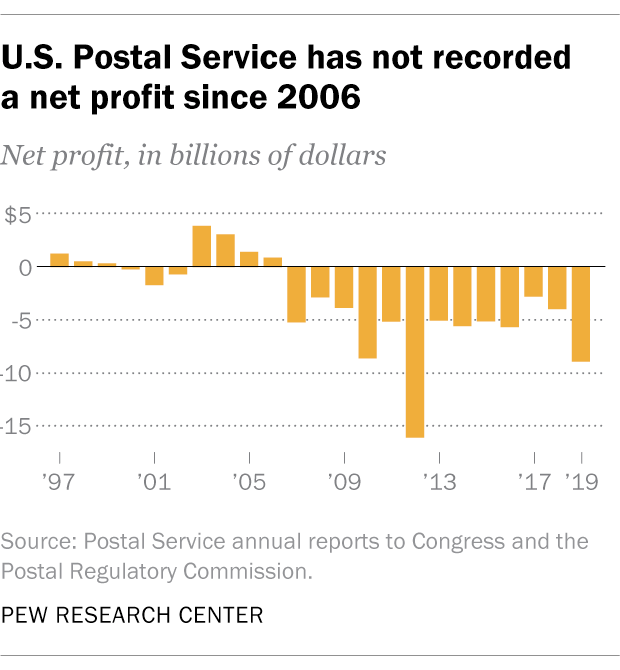
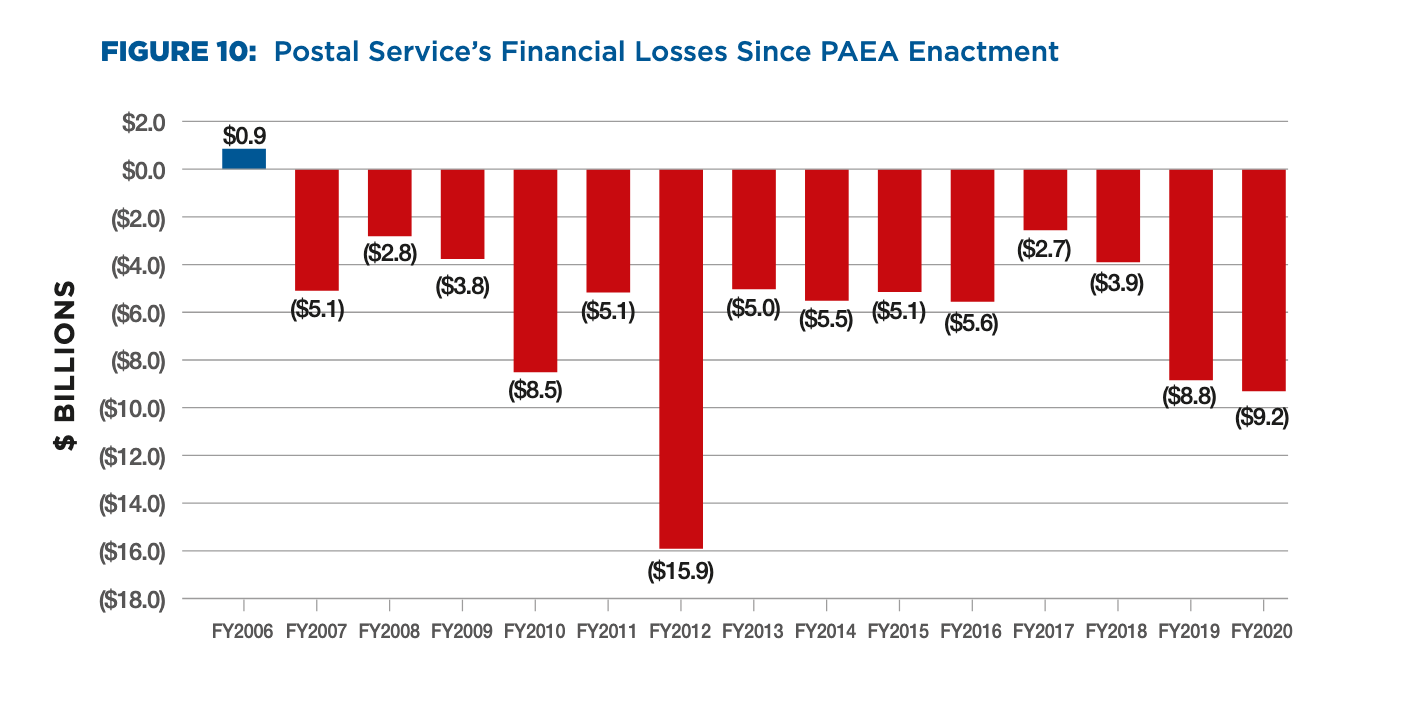
Actually, the USPS being in a gradual decline was a bipartisan consensus for decades. Obama’s White House dedicated a whole blog post to it. It wasn’t even an argument. The USPS was categorically failing to deliver on its mission in two ways. First, USPS is legally required to operate in a self-sufficient manner, or at least not lose money (Postal Reorganization Act of 1970, Postal Accountability Act of 2006). And yet:
Also, USPS is required to deliver mail to every American household in a timely manner, where timely is defined by specific service levels. And yet:
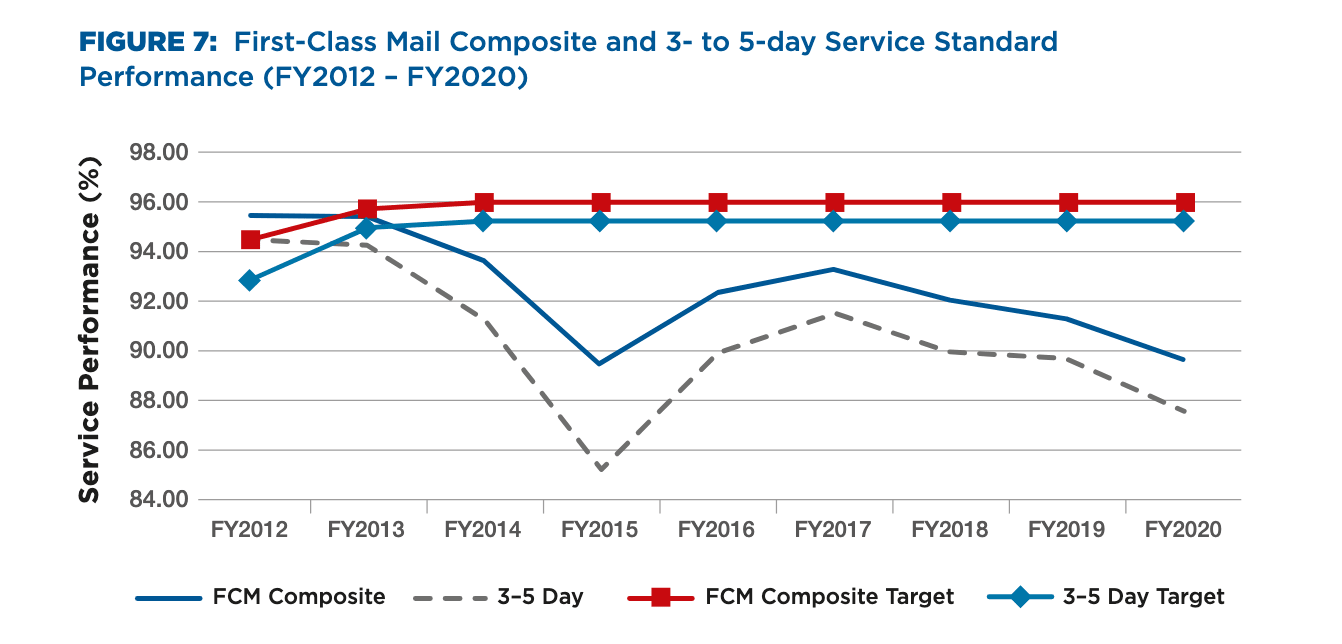
Each year USPS was failing ever shorter of its mission. A turnaround was necessary. In 2021 USPS rolled out a 10-year plan for fixing USPS.
What was the 2020 USPS turnaround plan?
USPS published “Delivering for America” in 2021 (DFA). The report laid out five structural reforms that would enable USPS to meet its goals. Lawmakers were the intended target of the report, as Congress would have to rewrite the USPS governance framework to effectively greenlight the plan. The proposed reforms were
Structural Reform 1: Retirement & Healthcare Mandates
By way of a legislative quirk USPS was mandated to funnel excessive amounts of cash into its healthcare and retirement plans. Specifically, the 2006 Postal Accountability Act required USPS to make conservative actuarial assumptions and prevented Medicare integration. The report’s position was that all of this extra cash wasn’t even benefitting taxpayers or employees. For example, the USPS had to put aside ~$5bil per year to cover potential future costs for future employees who hadn’t been hired yet, and in some cases hadn’t even been born yet. Those billions of dollars were deposited into a treasury account, helping nobody. This rule is especially crazy. Only the Dalai Lama worries about selecting future employees before birth, and even he isn’t pre-funding their retirement account. By contrast, most American institutions are massively underfunding their retirement obligations:
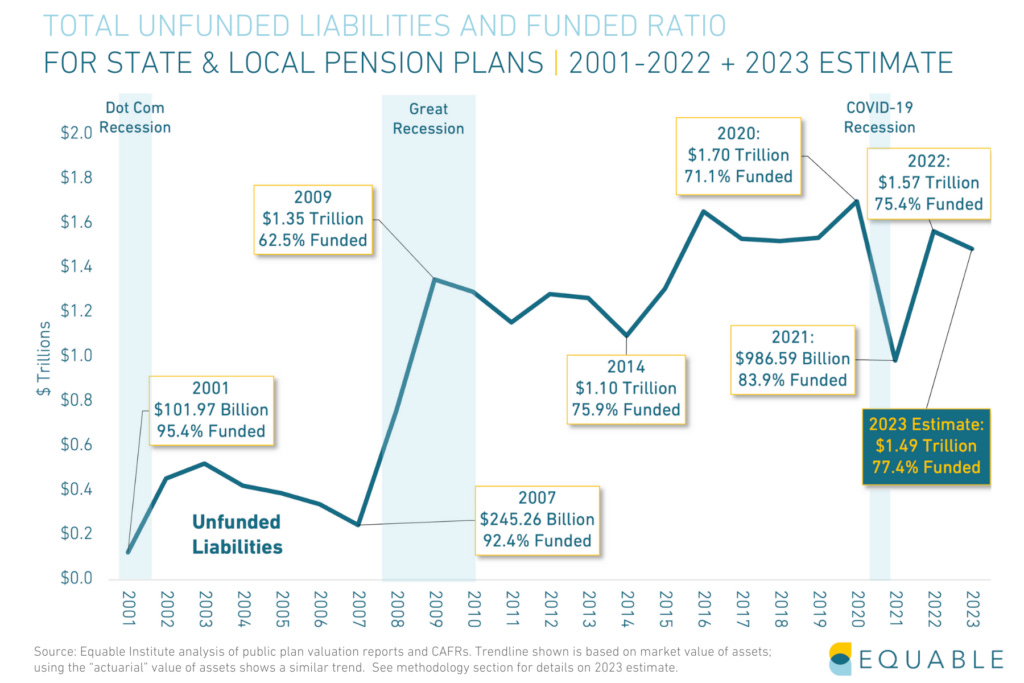
Underfunding future obligations isn’t a good thing, but neither is overfunding. Swiping a credit card to buy a Thanksgiving turkey and then paying it back later is at least defensible; pre-paying for the turkey in July is crazy. USPS was at a major disadvantage to competition. Normal organizations reinvest cash flow into their business; USPS is forced to divert cash to a checking account.
This rule was put in place around 2006, after which USPS losses began mounting:
Proposed Structural Reform 2: Update Pricing Architecture
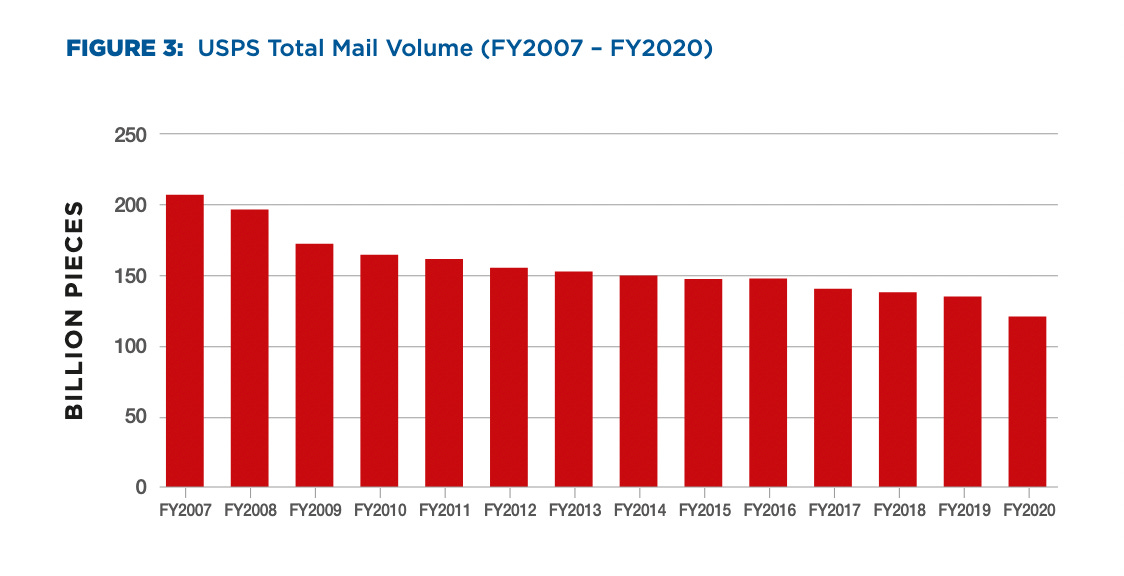
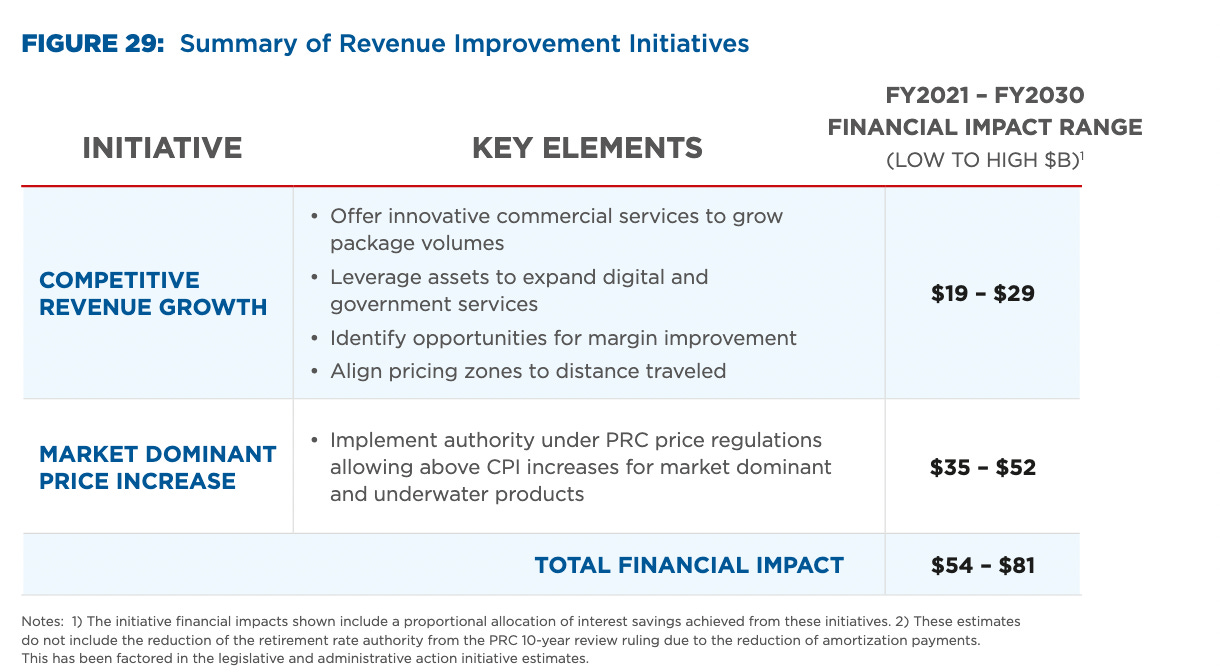
Legislation prevented USPS from freely raising prices, limiting them to inflation-level bumps in most cases. At first glance this makes sense because nobody wants to see price gouging from a public service. The problem was that the pricing architecture was built on a pre-internet world. Total mail volumes have collapsed in the last 20 years: The collapse is probably even worse than this chart suggests. Nobody has received an interesting piece of snail mail since Harry Potter got accepted to Hogwarts. The entire letter complex is propped up by home mortgage or auto warrant spammers. Oh, if only the Pony Express pioneers could say how far they’ve fallen! What this means in practice is that USPS has many large, expensive facilities dedicated to processing mail that are sitting half-empty. Underutilized facilities are margin-killers! USPS is bleeding cash operating these legacy sites. Unless Gen Alpha decides writing longform Antebellum-style love letters is vintage-chic then USPS losses will continue to spiral out.
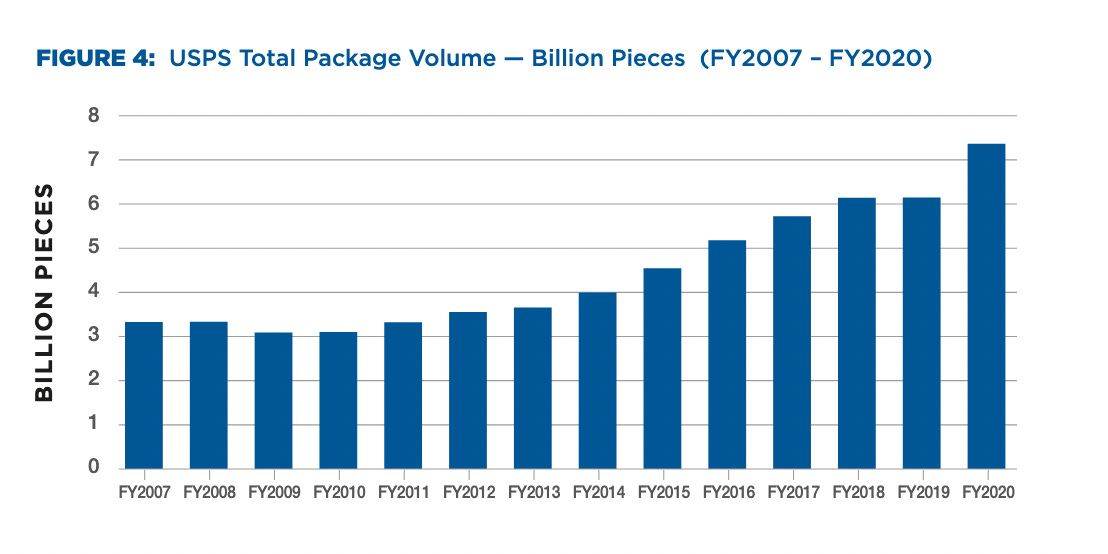
Meanwhile, as e-commerce went from 2% of retail sales to 15%, USPS has been overwhelmed by packages:USPS was built as a letter-delivery service but is becoming a package-delivery service. What does this have to do with pricing? USPS is a logistics business and logistics businesses have centralized costs. The direct cost of delivering an envelope or package is almost nothing, it’s the labor of having the postal worker walk from their vehicle to a doorstep. Most of the cost of delivering mail comes from operating post offices, running huge mail sorting centers, and transporting truckloads of mail. These are centralized costs. These centralized costs are much higher when delivering big boxes instead of flat envelopes. This has meant USPS internal costs have gone up way faster than they are allowed to increase prices (which is pegged to the Consumer Price Index). This has pressured USPS’s profitability.
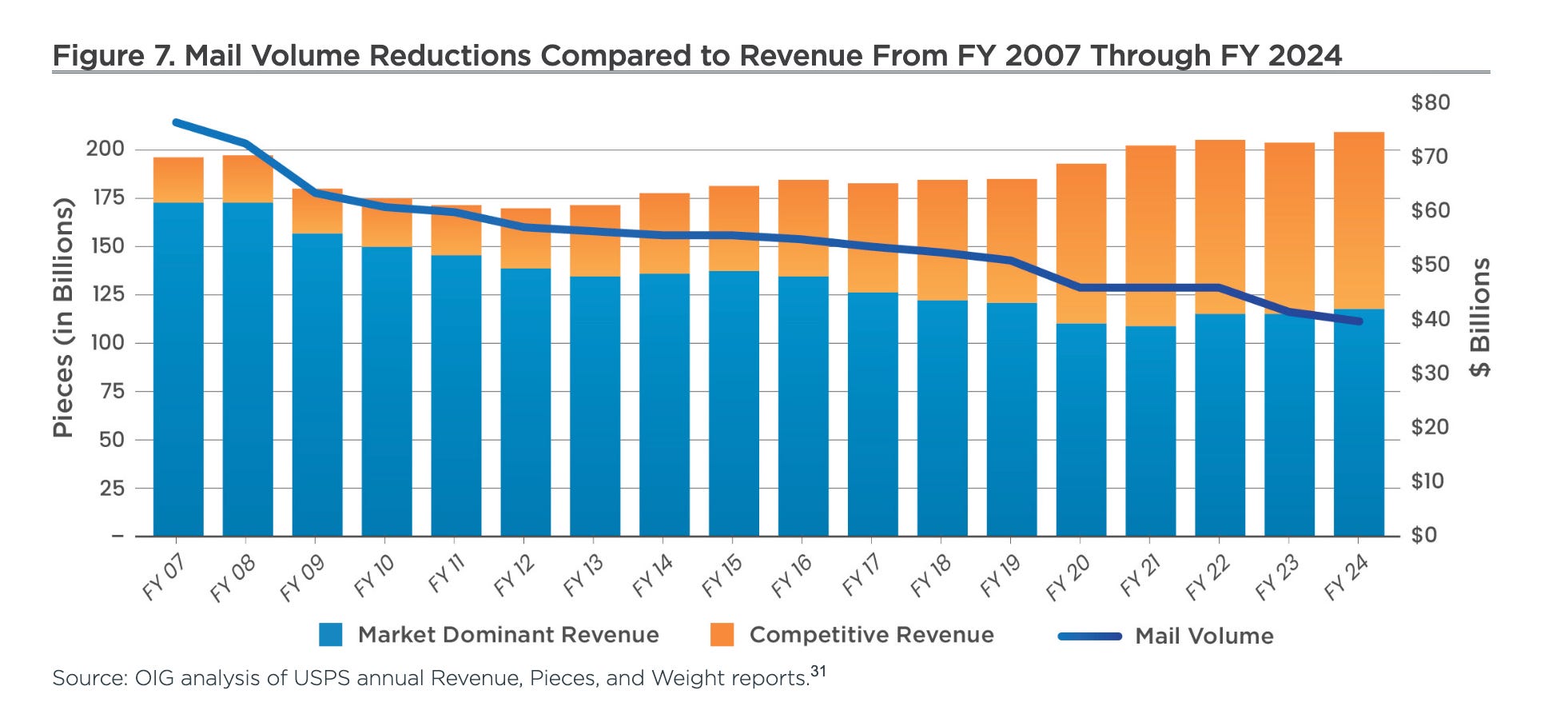
One final related challenge is corporate logistics partners. Amazon, FedEx, UPS and the likes account for an increasing share of USPS deliveries. Since USPS is mandated to deliver to every address in America, these partners have the benefit of dumping all the most difficult-to-deliver packages to USPS. Small square box going to 5th Avenue in New York? Oh, FedEx will handle that. Poorly wrapped pair of skis going to a swamp house in the Everglades? Eh, USPS can have that one. This is not a bad thing. The whole point of USPS is to make sure Americans have equal access to mail services. The problem is the USPS ability to negotiate with these partners was tightly regulated to their own detriment. Also, these partners were increasingly competing with USPS because they specialize in parcels, whereas USPS has a near-monopoly on letters.
“Deliver for America” asked Congress to rethink regulation around USPS pricing, and promised taxpayer savings of over $50bil by 2030.
Structural Reform 3: Lower Service Standards
The fastest way to meet expectations is to lower them. USPS proposed a new service level framework that would accept ~70% of mail delivered within three-days instead of the old 100%. This one simple hack will let you immediately meet your congressionally mandated targets! Improving performance by lowering service levels would be a meaningless paper victory, the type of thing that could be misleadingly sold to voters as effective policy. Even better, the adverse change would mainly impact remote, rural and poor communities. What does Congress love more than a) further disenfranchising marginalized communities and b) parading around meaningless bureaucratic changes as legislative victories? That is one fat worm dangling in front of the pea-brained trout that is the American Congressperson.
Reducing service levels seems like a total copout but it’s actually a reasonable solution. The collapse of the mail market means total USPS volumes (packages + parcels) halved. Let’s say Erect, North Carolina (real town, awesome name) used to get 10,000 letters a day in the 1980s. Today it gets 5,000 letters a day. USPS still has to send out its carriers in full force each day to meet service levels, but it’s getting ½ the revenue it used to. The fixed cost nature of logistics + inability to increase pricing = broken business model.
Another insidious way aggressive service levels hamstring USPS is overreliance on air freight. To meet unrealistically fast service levels USPS increasingly relied on planes to move its product. Air freight is fast but expensive. As of 2021, USPS was moving 21% of volume via air but expected that its newly proposed service levels could reduce that to 12%, a significant cost savings.
“The current standards do not reflect dramatically declining mail volumes, and require the Postal Service to use complex, high cost and unreliable transportation networks. They are simply unsuitable for setting realistic expectations for timely and reliable mail delivery in today’s environment.” - Delivering for America, 2021 Plan
Structural Reform #4: Scrap & Rebuild the USPS Operation
If there’s one common theme so far, it’s that the obsolescence of the USPS business model. The Postal Service was like Playboy Magazine: there was without question demand for what they produce, but in the digital age they no longer had an economically viable way to produce it. USPS, possibly seeing the grotesque final years of Hugh Hefner and taking a hint, had a plan to modernize. The Postal Service estimated that it had deferred over $20bil in necessary investment because of its cash flow problems. In its 2021 plan USPS directly asked Congress to help it make up for missed investment by injecting $40bil over a ten year period ($16bil more than was budgeted). They would use that money to:
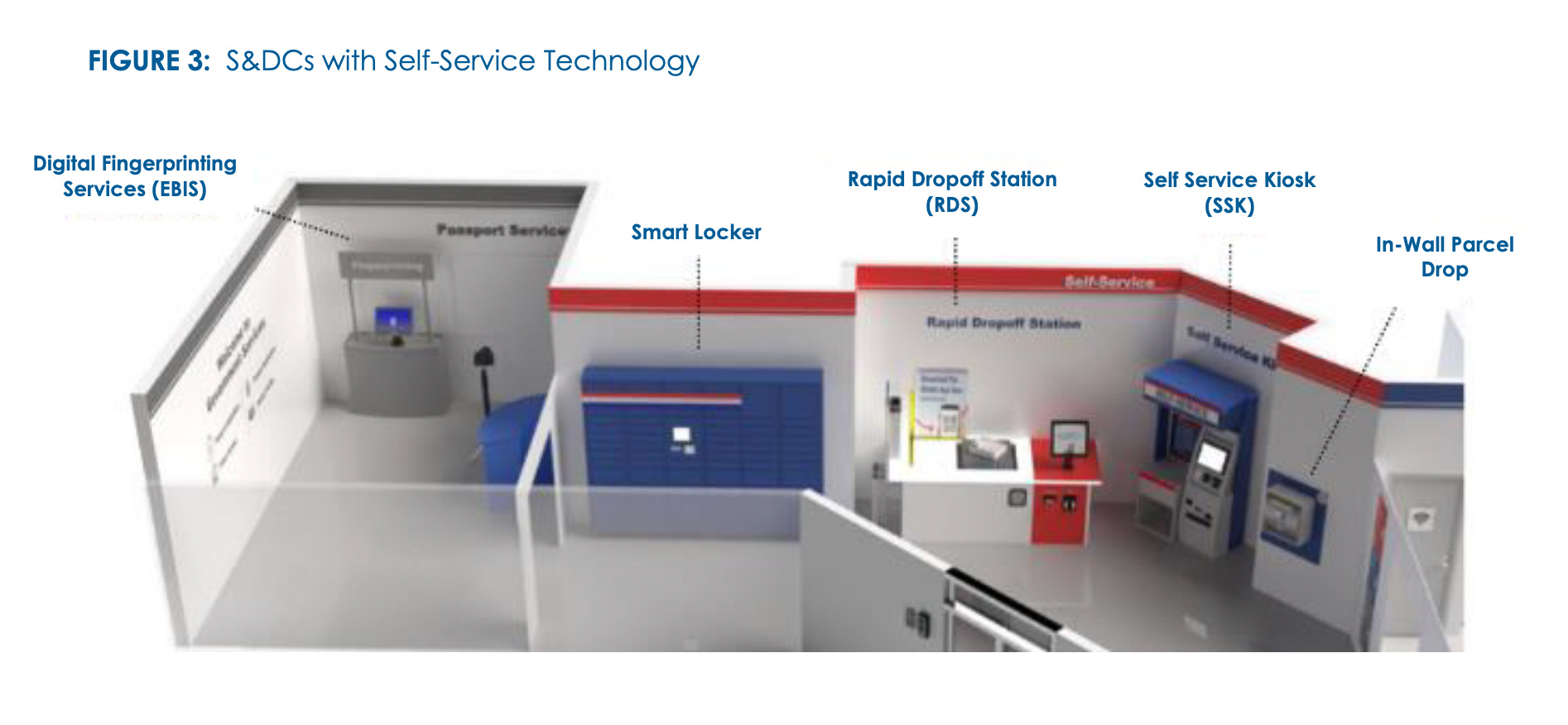
Upgrade its retail footprint. USPS stores would receive a $4bil makeover to modernize stores. This included basic stuff like uniform refreshes and fresh paint as well as new & improved technology like self-service kiosks. Store layout and use of space could change too. Most of USPS 31,000 locations were designed to accept huge volumes of letters but have no space to store parcels.
Deploy a new state-of-the-art logistics software platform. This would help them optimize route efficiency, track lost packages, and offer basic services that competitors like Amazon had been offering for 10+ years.
Automation: more package-picking and sorting robots. Competitors have leveraged this technology to drive down costs for decades and USPS is way behind.
Upgrade & electrify the fleet: USPS wanted to buy a new fleet of vehicles, including over 50,000 electric vehicles. Its fleet was aging and maintaining an aging fleet was expensive.
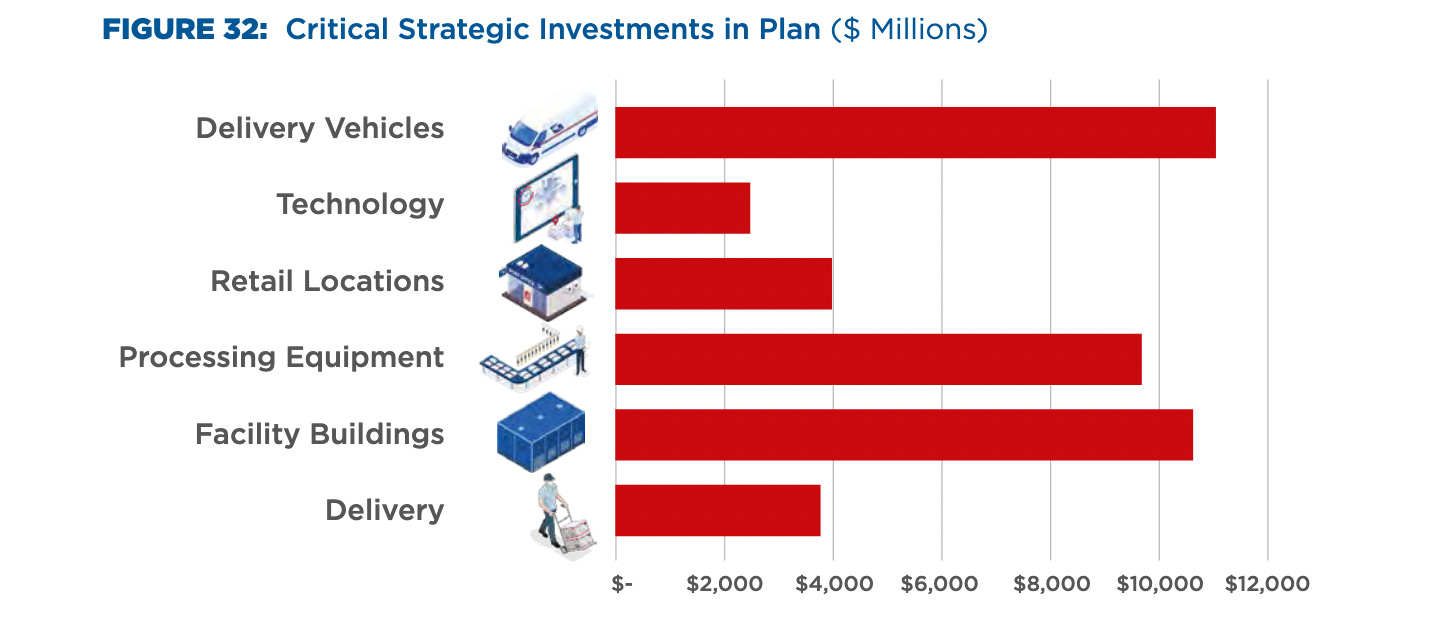
Altogether USPS thought this extra $16bil from Congress could save as much as $40bil in operational costs by 2040.
Structural Reform #5: Restructuring the organization
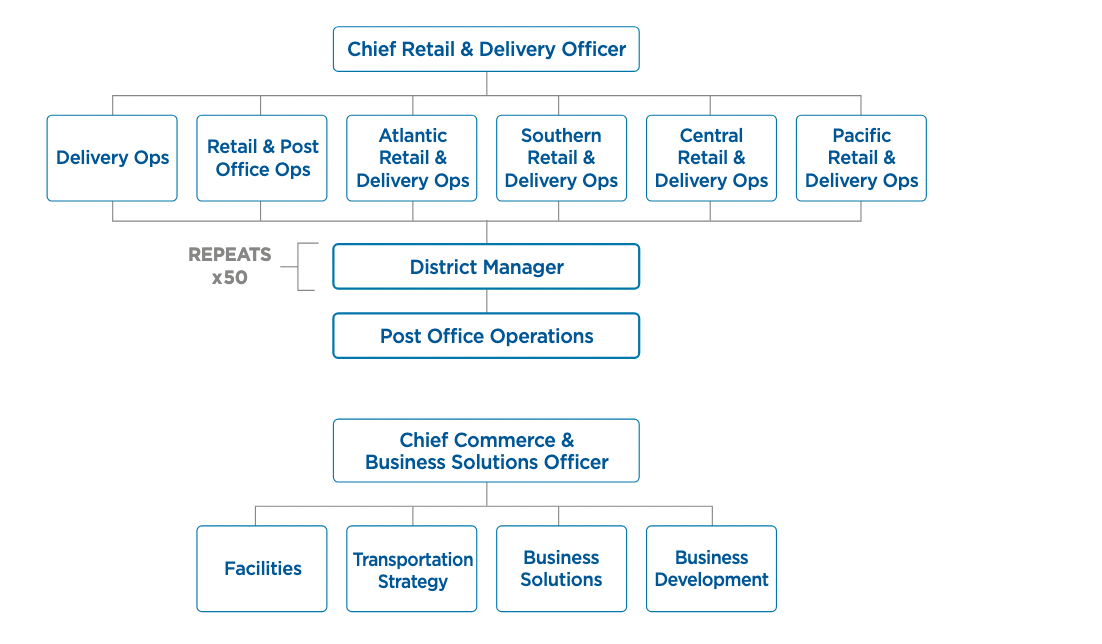
This is the most boring, but still important reform. Delivering for America argued that the organizational structure of USPS hampered efficiency and obstructed good decision-making. They shared a snapshot of the existing orgchart, and reader warning, it is hard to look at without vomiting:
Summarizing the 5 proposed reforms
To summarize everything so far, USPS proposed five reforms to solve its fiscal and operational ineptitude:
Changing the legislative mandates that force the USPS to overfund its healthcare and retirement accounts, freeing up billions of dollars for reinvestment.
Fix the pricing architecture to reflect the shift from high-volume, low-cost letters to lower-volume, high-cost parcels, and to improve negotiation power with corporate logistics partners.
Lower unrealistic service standards to better align with reduced mail volumes
Ask Congress for $40 billion to modernize the obsolete USPS operation by upgrading retail locations, deploying state-of-the-art logistics software, increasing automation, and electrifying the aging vehicle fleet.
Restructure the organization to make it more effective.
Did USPS deliver on the Delivering for America plan?
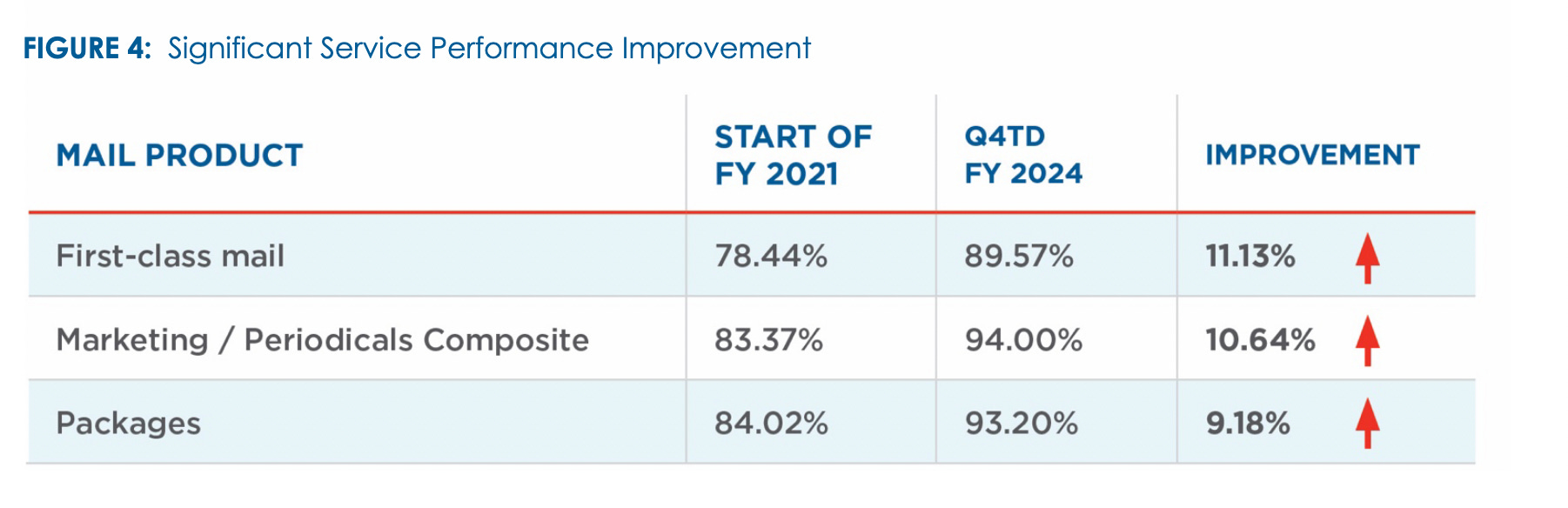
Service levels have undeniably improved since the DFA:
Financial losses, on the other hand, got a bit better before getting worse:
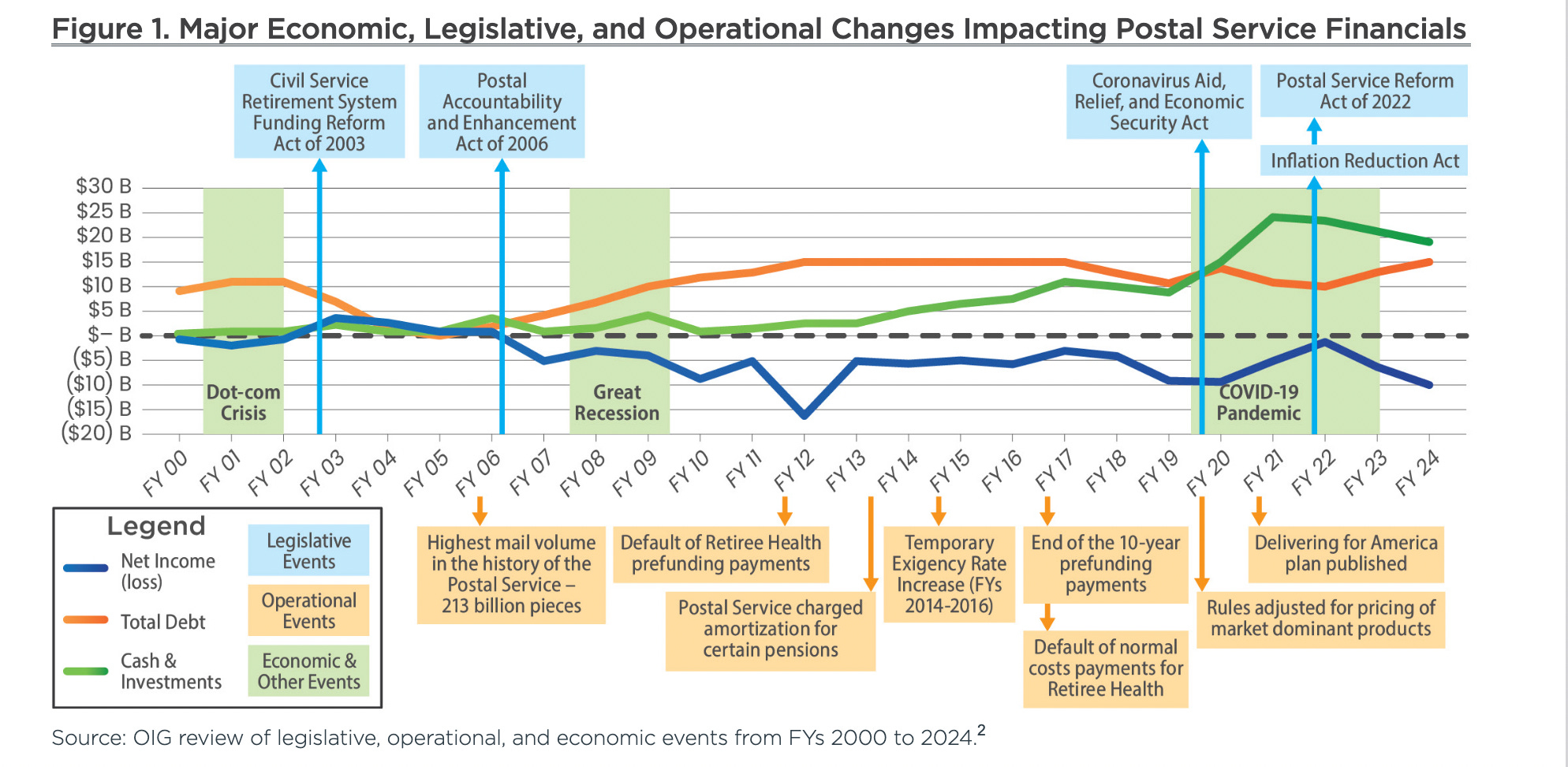
So at first glance, it’s mixed results. A closer look reveals clear signs of progress, but also increasing risk of failure.
USPS was able to pretty much totally deliver on two of its proposed reforms. First, Congress agreed that the accounting requirements around healthcare & retirement were unnecessarily onerous (proposed reform #1). In 2022 lawmakers passed The Postal Service Reform Act to update the requirements, and USPS thinks this will save >$40bil over the next decade.
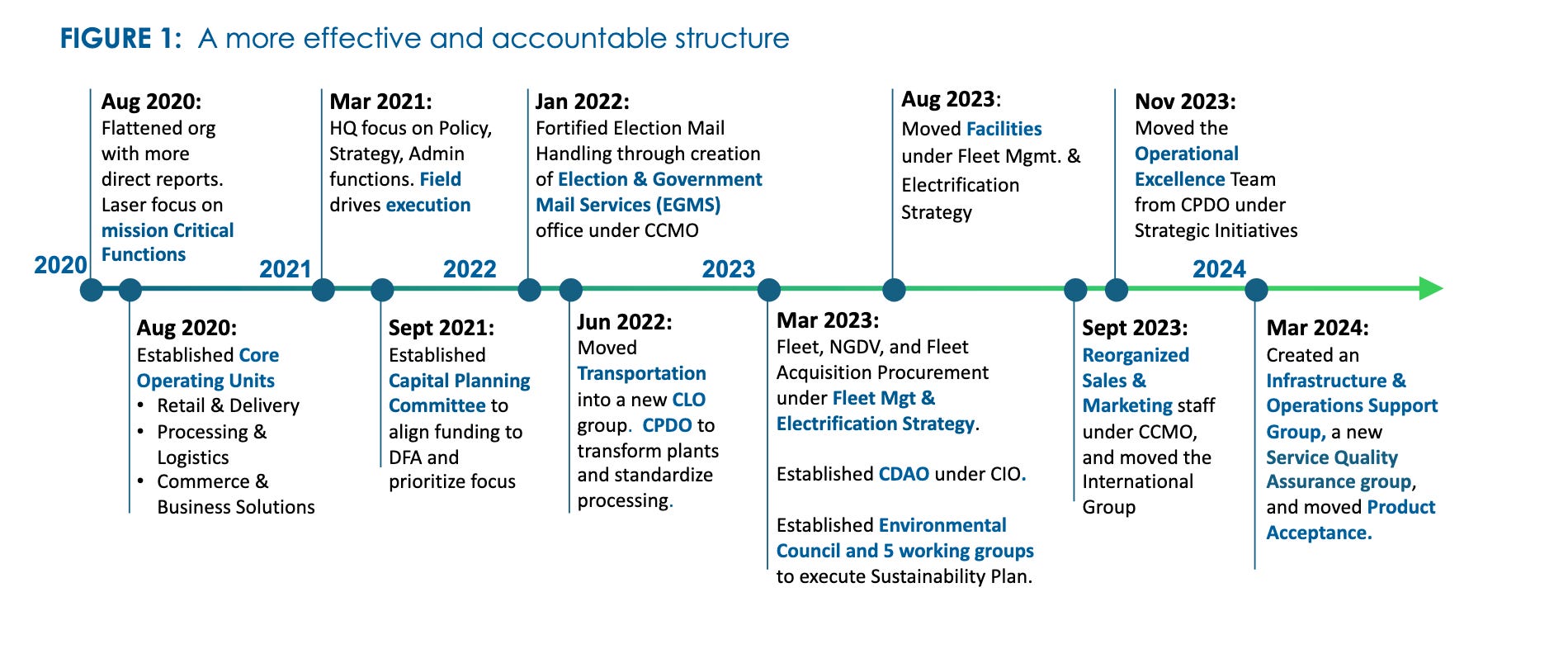
Second, USPS underwent a corporate reorganization (proposed reform #5). USPS has the authority to determine how it is organized, so they didn’t need Congressional approval. Changes are ongoing but seem to have delivered so far (made it this far without making a stupid mail pun).
USPS was also able to relax its service levels a little bit (proposed reform #3). Congress didn’t formally change any rules, but USPS has the power to make some alterations, like shifting First Class Mail delivery windows from 1-3 days to 1-5 days. This mechanically helped improve service levels, but also helped USPS transition away from expensive air freight and toward ground freight, which they say has saved >$1bil. USPS reports are very clear that there is more to do, but congressional support is needed.
Congress has also not made any changes to its rules around postal pricing (proposed reform #2). This was especially painful over the last three years for two reasons. First, USPS internal inflation was more severe than the broader CPI inflation in 2022 and 2023. Second, COVID accelerated the growth of e-commerce which meant more parcels and exacerbated USPS pre-existing pricing issues with parcels. Congress did offer $10bil to USPS as pandemic relief and another $3bil as part of the Inflation Reduction Act, but losses still mounted. Still, USPS was able to make some changes without Congressional help. For instance their 2025 update claims they “increased revenue by $3.5 billion annually while transitioning its product offerings in the face of significant declines in mail volume.”
Congress has also not provided USPS with any of the $16bil in extra funding to help it modernize its footprint (proposed reform #4). However, USPS has been able to leverage its savings in other areas, as well as extra funding during COVID, to make some of the investments it laid out:
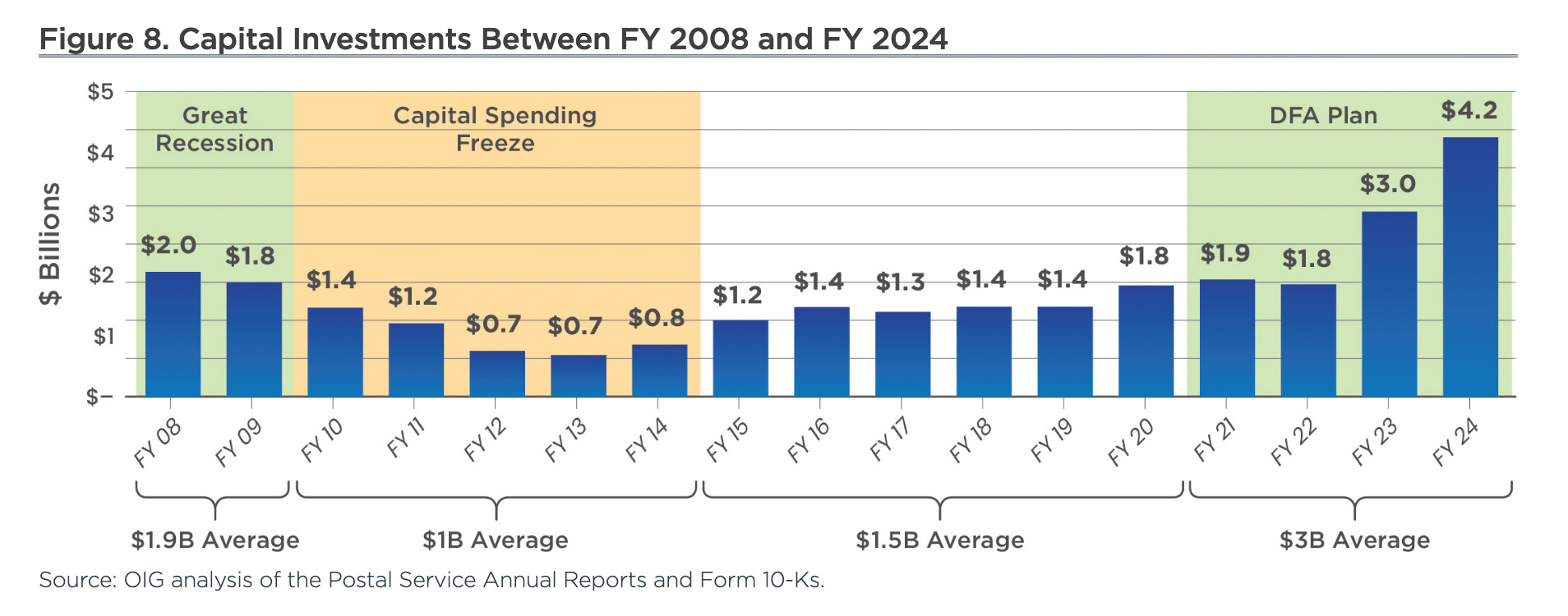
Among its achievements, USPS says it has cut “$1.8 billion in annual transportation costs by eliminating redundant networks…and reduced $2.3 billion annually by improving plant productivity, and eliminating unnecessary facilities.”
USPS losses have increased the last two years, but USPS has started reporting an “adjusted loss” number that only shows numbers in its control. Adjusted or Pro Forma numbers shared by management teams should always be taken with a healthy dose of skepticism, but the above information does make a good case that USPS has improved its business operationally, and the financial benefits should start to manifest over time. Often with big investments like warehouses and sorting facilities it can take a few years for utilizations to mature and best practices to be implemented.
Putting it all together, USPS has made some progress on its 2021 turnaround plan and the most recent annual report indicates there is a clear roadmap for more operational improvement and investment in the future. Yet financial losses continue to mount and the crisis is becoming existential. In the Postal Service’s own words (from it’s 2024 annual report):
“We have vastly improved the financial health of our organization over the last three years. Still, if we do nothing more, we remain on the path to either a government bailout or the end of this great organization as we know it. We must ensure that we have the infrastructure, equipment and people we need, when and where we need it. We must be free to act like Congress designed us to act: As an independent agency free from political interference and unnecessary regulation. Our progress must not be halted, or unreasonably slowed, by policymakers that are resistant to change for short-sighted, parochial reasons.”
In other words, Congress needs to get off its ass if it wants USPS to survive long term.
What’s next for USPS?
David Steiner became the new Postmaster General this year. Like his predecessor Louis Dejoy, Steiner is a Trump appointee from the private sector; he previously was CEO of Waste Management and on the board of FedEx. He gave a sort of State of the Union speech at November’s USPS Board of Governors meeting. Most of his points were what is outlined above: USPS can become more efficient by modernizing its platform and infrastructure. He also called on Congress to step up with major reform, especially on pricing. A new wrinkle from Steiner was emphasis on more partnership with the private sector especially last mile (last mile = the final leg of the delivery journey). Steiner’s point was that the USPS is the de facto last mile logistics firm of the US. The USPS is legally must deliver to every house in America on a regular basis. Any alternative, be it Amazon or DHL, can pick and choose when to deliver. Steiner wants USPS to find a way to double-down on this and deliver more packages for corporate logistics firms at fair and mutually beneficial prices. He went on to announce a new deal with UPS in which the Postal Service will deliver more of their last-mile packages. “We are open to working with customers, big and small, by offering expanded last-mile service to serve their customers, fulfill market demand, and maximize our revenue.” Apparently, according to Steiner’s speech, more similar deals will be announced soon. And those deals may be on better terms for USPS - the latest rumors around the USPS are that they are taking a hardline stance in price negotiations with Amazon. Still, that doesn’t change the fact that without serious Congressional reform the USPS will not be able to complete its turnaround, and risks being a failure of a government agency.
Parting thoughts
I’m interested to hear perspectives from employees of USPS. What’s it been like working there the last five years? Are a lot of the reported cost-savings really efficiency gains or are short-sighted corporate budget cuts that will end up harming USPS longer-term? There are a number of US Postal Unions that openly spoke out against the initiatives of the last few years. That said, it does seem that USPS has credibly improved operations. It’s hard to know for sure from the outside.