

In the 2024 US Presidential election mega-donors swung Republican; Trump raised over $500 million from super PACs vs. $100 million in 2020. One large, vocal contingent of Trump mega-donors was the Silicon Valley elite. A faction of ultra-rich tech entrepreneurs & investors, all historically loyal liberals, made news when they publicly swung conservative. It was the greatest defection of American elites since Not Like Us dropped.
This is all last year’s news so why bring it up now? Because I never fully understood why the defection happened. Silicon Valley royalty became royalty under Democrat administrations. Ben Horowitz and Marc Andreseen launched the venture capital fund that made them billionaires, a16z, in 2009. Chamath Palihapitiya made a fortune at Facebook and then backed startups like Slack in the early 2010s. Yet they, and a dozen other high-profile technologists, decided that the party they had supported, under whose rule they ascended to the highest echelons of wealth & status, was suddenly no longer the right one. It’s a year late but I finally tried to break down why the great defection happened. Based on interviews, podcasts, and essays there are three explanations for these decisions.
Explanation 1: Purely a business decision
Most of the Silicon Valley defectors focused on economic, not social, policy. A common complaint was that the Biden administration over-reached on regulation. Marc Andreseen said he was “absolutely horrified” by the Biden advisors approach to AI, which he described as treating AI something like a government-controlled utility rather than a burgeoning, limitless technology. The Winklevoss twins announced “Biden has declared war on crypto.” Other grievances include Linda Khan’s FTC, which blocked the Nvidia-ARM merger and filed lawsuits against big tech, and complaints from senior tech leaders, including Mark Zuckerberg, that the Biden White House was pressuring big tech to moderate content via unofficial backchannels. All this together paints the picture of a Democratic agenda that was at-odds with the business agenda of tech elites. Whether this was true, or whether the aggressive oversight was bad for the economy or just bad for the big tech monopolists, is besides the point. The Silicon Valley defectors believed it, or at least cited it as rationale for switching support.
It might not have been about any of that, though. It’s entirely possible that this incredibly well-informed and powerful group of people realized a Trump win was very likely. The betting and stock markets seemed to tilt toward Trump by late summer, and presumably well-connected insiders might have been able to figure it out sooner. Maybe some defectors were just backing a winning horse and justified it using Biden’s administrative overreach. In either case, the defection was just good business.
Explanation 2: Threat of disenfranchisement
Silicon Valley elites have a lot to lose. They are super-rich, politically powerful, and are celebrated socially despite, and I’m generalizing here, having the charisma of a sewer rat. Seriously, these people are annoying. I’ve spent hours listening to all the podcasts and Charlie Rose style interviews with venture capitalists. If you poked their forehead with a thumbtack the atmospheric temperature would rise three degrees. That’s regardless of political affiliation! Anyways, they have it all. A repeat Democratic administration threatened their empires in two ways. First, the wealth. Biden had publicly been considering some sort of ultra-rich tax, maybe on unrealized capital gains. Marc Andreseen called this “the final straw” as he saw it as a threat to American dynamism. Maybe true, but it was definitely a threat to his personal financial dynamism. These elites also seemed to fear for their social status by way of cancel culture. “Go woke, go broke” tweets & quotes are not hard to find from this crowd. This is reading between the lines a little bit, but it seems the risk of indiscriminate cancellation, the idea that any of them could be removed from Twitter, from Met Gala invitation lists, from lecture circuits, really struck home. Importantly the anti-woke sentiment is a big bridge between Silicon Valley elites and the more populist wing of Trump’s supporters, two factions who don’t share much else in terms of public policy goals.
Explanation 3: you need to listen to me
“I was a megadonor to the Democrats. I couldn’t get a phone call returned from the White House to save my life.” This is a complaint from Chamath Palihapitiya. It is reasonable, if not profoundly undemocratic, to expect a seven-figure check to be reciprocated with political access. Corporate leaders, not just from Silicon Valley but from all over, were spurned from the Biden White House:
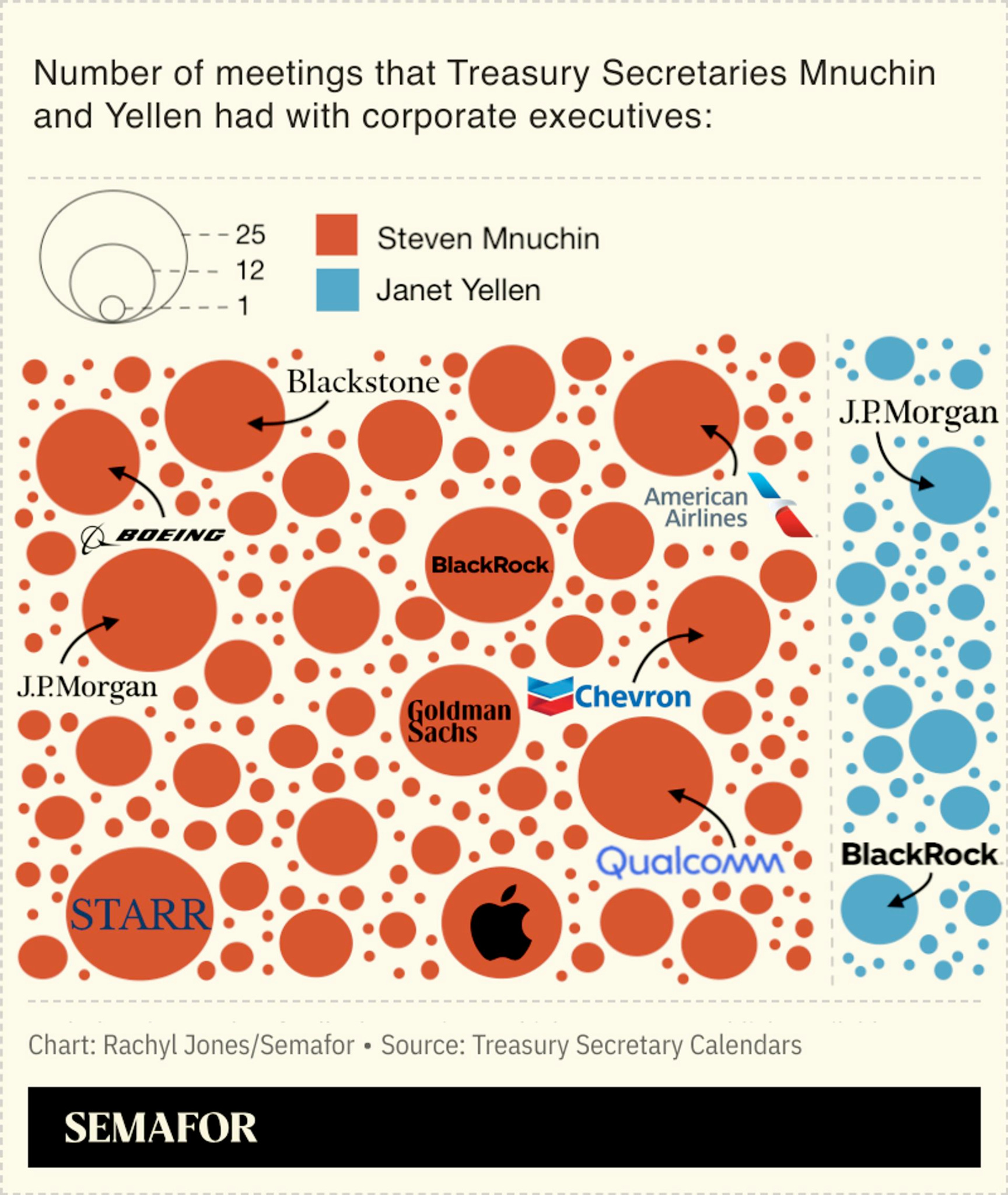
If political donations are investments, and these investments weren’t yielding returns, it makes sense that capital would be re-allocated. I think there might have been another layer of frustration beyond this. One thing about Silicon Valley elites is they have an opinion on everything. They are very successful and well-informed investors and founders, and they seem to believe their acumen qualifies them to investigate any problem. The a16z or All In podcasts talk about business but also about education, healthcare, anthropology, longevity, relationships, sociology, and more. I wonder if their frustration wasn’t just transactional, i.e. that they weren’t getting access & policy they paid for. It could also be a perceived personal slight, that the Biden administration was not valuing them as modern-day Rasputins, confidants able to advise on any topic.
Will the megadonors swing back?
I think so, at least some of them. The 2024 election doesn’t seem to be a seismic shift in the Silicon Valley electorate. For one thing, outside of the elites, there isn’t evidence of a conservative groundswell. Among the mega-donors, much of the anger seems to have been directed specifically at the Biden administration and the prospect of Kamala being a continuance of Biden. On the other hand, the Trump campaign made specific promises around crypto and de-regulation and running mate J.D. Vance was one of Silicon Valley’s own. In theory Democrats can replicate that next election. Some of the mega-donors, like Ben Horowitz, have already resumed donations to the Democrats. The 2028 election is a long time away but it doesn’t seem like the Democratic Party has forever lost the funding of Silicon Valley.